
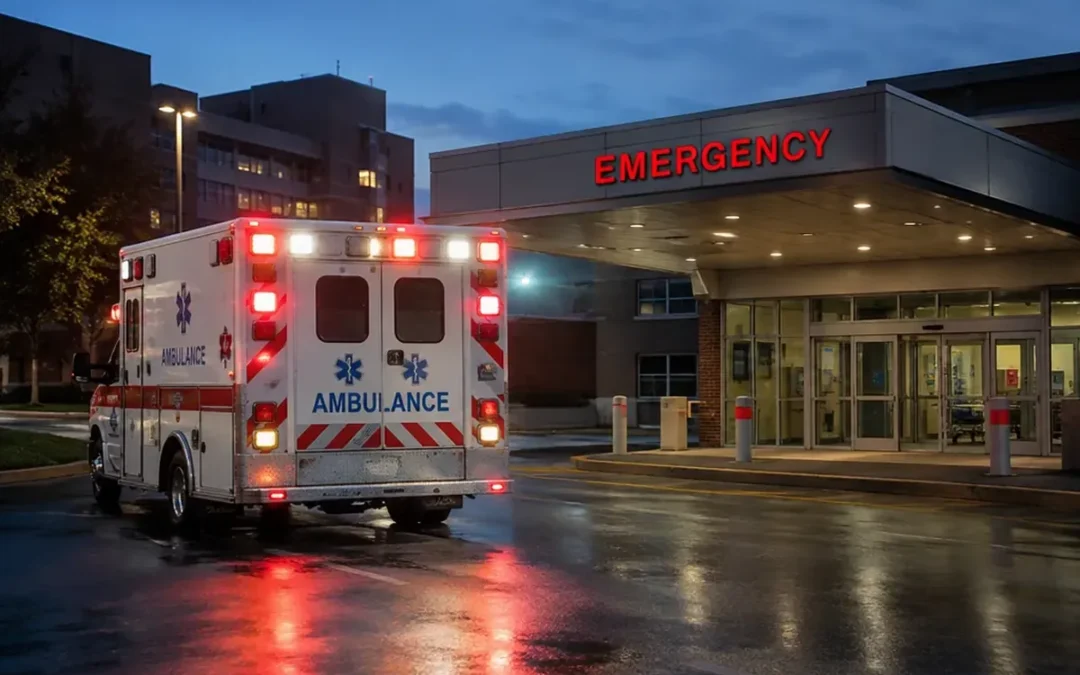
BEFAST, often written BE FAST, is a simple way to recognize possible stroke symptoms: check Balance, Eyes, Face, Arm, Speech, and Time. When any one of these areas changes suddenly, call 911 immediately. This is not a way to diagnose someone at home; it helps you spot a possible emergency before valuable treatment time is lost.
What BE FAST means when you suspect a stroke
Under pressure, BE FAST turns six warning signs into a sequence you can remember. Look for changes that are sudden, not gradual. One sign may be all that appears, and symptoms can look different from one person to the next.
- B — Balance: sudden loss of balance, dizziness, or trouble with coordination.
- E — Eyes: sudden blurred vision, double vision, or loss of vision in one or both eyes.
- F — Face: one side of the face droops or feels numb. Ask the person to smile; an uneven smile is concerning.
- A — Arm: sudden weakness or numbness in an arm or leg, especially on one side. When both arms are raised, one may drift down.
- S — Speech: slurred speech, trouble speaking, or trouble understanding language.
- T — Time: call 911 at once for any of these changes. Do not wait to see whether they improve.
In the United States, only an estimated 36% of people know even one stroke warning sign. That gap matters because a family member, coworker, or stranger may notice the change before the patient does.
How to perform a BE FAST assessment without delaying 911
On seeing a sudden change, call 911 first or have someone else call while you stay with the person. Use the checks below afterward to describe what you saw. For emergency responders, those observations can clarify the situation, but they must never delay the call.
- Look at balance and coordination. A clinical check can include touching a finger to the nose and sliding each heel down the opposite shin. Notice sudden difficulty doing either movement.
- Check vision. First ask whether vision changed suddenly. In a trained exam, all four visual-field quadrants may be tested, along with following a raised finger with the eyes.
- Check the face. Have the person smile or show their teeth and raise their eyebrows. Watch for uneven movement or numbness on one side.
- Check the arms. With palms up and eyes closed, have them raise both arms. A downward drift in one arm is a possible sign.
- Listen to speech. For a quick check, have them repeat a familiar sentence, such as “You can’t teach an old dog new tricks.” Listen for slurring, unusual words, or trouble understanding the request.
- Note the time. Record when symptoms first appeared. When speaking to 911, say, “I think this is a stroke.”
For example, when a colleague suddenly reports double vision, stumbles, and cannot repeat a simple sentence clearly, you do not need every item on the list to be positive. Call 911 and note when the changes began.
Why BEFAST can catch signs that FAST can miss
In FAST, the focus is on Face, Arm, Speech, and Time. By adding balance and eye changes, BE FAST can help with strokes affecting the back of the brain’s circulation.
| What was compared | BE FAST | FAST |
|---|---|---|
| Posterior-circulation strokes recognized in a 2024 comparison study | 45 of 46 | 27 of 46 |
| Sensitivity in that group | 97.8% | 58.7% |
| Specificity in that study | 10.0% | 39.8% |
An important tradeoff is that BE FAST may generate more false alarms. During a possible stroke emergency, that means emergency clinicians should evaluate the person; it is not a reason to wait. In the same study, FAST alone would have missed 39.1% of patients with posterior-circulation stroke.
What to do while help is on the way
Rather than driving the person to the hospital yourself, call 911. During transport, EMS teams can assess the condition and begin life-saving measures; in some settings, treatment or a CT scan may begin before arrival. The dispatcher can also help direct the patient to an appropriate hospital.
- State clearly that you think the person is having a stroke.
- Write down the time symptoms started.
- Stay alert for changes and share what you observed with EMS.
- Call even if the symptoms disappear after a few minutes.
When symptoms resolve, the cause can be a transient ischemic attack, or TIA: a temporary interruption of blood flow to the brain. Although a TIA may leave no lasting brain damage, it warns of higher risk for a later stroke. Emergency evaluation is still required.
Why minutes matter more than the “4-hour rule”
Despite the phrase “4-hour rule,” treatment decisions are more complex. For selected patients, intravenous alteplase, also called tPA, must be given within 4.5 hours of symptom onset; U.S. guidance recommends it for selected patients within the 3-to-4.5-hour range. With specialized imaging criteria, mechanical thrombectomy may be possible for selected patients up to 24 hours after symptoms begin.
Those windows are not permission to wait. Earlier treatment works better. In a meta-analysis of 78,826 patients, thrombolysis in the first hour was associated with a 1.4-times greater likelihood of an excellent functional outcome. For a typical large ischemic stroke in the front circulation, an estimated 1.9 million neurons are lost each minute without treatment.
For that reason, the most useful clock starts with the first sign, not with arrival at the hospital. Give responders the clearest possible time for when symptoms first appeared.
What causes most strokes and which risks you can change
About 87% of strokes are ischemic, meaning a blood vessel is blocked; about 13% are hemorrhagic, meaning bleeding occurs. The major causes of ischemic stroke include clots related to heart rhythm problems such as atrial fibrillation, blockages in large arteries, and small-vessel disease.
The claim that “80% of strokes are caused by one thing” is misleading. Modifiable risk factors—including high blood pressure, obesity, physical inactivity, smoking, and an unhealthy diet—account for an estimated 82% to 90% of all strokes. High blood pressure is the most important changeable risk factor across stroke types.
Atrial fibrillation deserves special attention: in people older than 80, it causes 20% to 25% of strokes. Anticoagulation can lower that risk by about two-thirds. If you have a known rhythm condition or high blood pressure, discuss prevention with your clinician rather than relying on a symptom checklist.
When symptoms do not look like the usual picture
BE FAST is designed to help you recognize common sudden changes, but it is not a full medical exam. Symptoms developing over hours or days can point to other causes, such as Bell’s palsy or migraine, yet new or concerning neurological symptoms should still be evaluated by a doctor.
Women more often report nontraditional symptoms, including loss of consciousness, nausea or vomiting, headache, changes in mental state, generalized weakness, or pain. These symptoms can delay recognition and diagnosis. A sudden symptom that concerns you, especially alongside a BE FAST change, is a reason to call 911.
Common BE FAST myths can cost time
“I should wait to see if the person gets better.”
No. Stroke symptoms can improve temporarily, including during a TIA. Call 911 immediately even if they go away within an hour.
“A person needs facial droop before it is a stroke.”
No. Sudden vision or balance problems may be the first clue, especially in posterior-circulation stroke. One sudden BE FAST change is enough to act.
“The test tells me whether it is definitely a stroke.”
No. BE FAST is a recognition tool, not a diagnosis. Its value is in helping you call for urgent medical help quickly.
Frequently Asked Questions
What does BEFAST stand for?
BE FAST stands for Balance, Eyes, Face, Arm, Speech, and Time. It is a memory aid for recognizing possible stroke symptoms that start suddenly.
What are the BEFAST symptoms of a stroke?
Look for sudden loss of balance, vision changes, facial droop or numbness, weakness or numbness in an arm or leg, and speech or comprehension problems. Then call 911.
How do you do a BE FAST assessment?
Call 911, then observe balance, vision, facial symmetry, arm drift, and speech. Note when the symptoms started, and report it to EMS.
Should you call emergency services if stroke symptoms go away?
Yes. Symptoms that go away may be a TIA, which is a warning sign of increased risk for a later stroke. Call 911 even if the person feels normal again.
What is the 4-hour rule for stroke?
It is a shorthand, not a rule for waiting. Selected patients may receive alteplase within 4.5 hours, while selected patients may be eligible for thrombectomy up to 24 hours. Emergency clinicians decide based on timing and evaluation.
Why is getting treatment quickly important after a stroke?
Brain tissue can be lost with every untreated minute, and earlier thrombolysis is associated with better outcomes. Calling 911 promptly gets trained responders involved as soon as possible.